
Edgar Wright’s Masterstroke: Revitalizing Stephen King’s ‘The Running Man’ for a Hyper-Dystopian Age










Popular Now
 Counter-Strike 2
 Minecraft
 Call of Duty
 Free Fire Max
Gacha Club
Geometry Dash
Free Fire Max
Gacha Club
Geometry Dash
 Free Fire
 EA SPORT FC 25
 Toca Boca World
 Fall Guys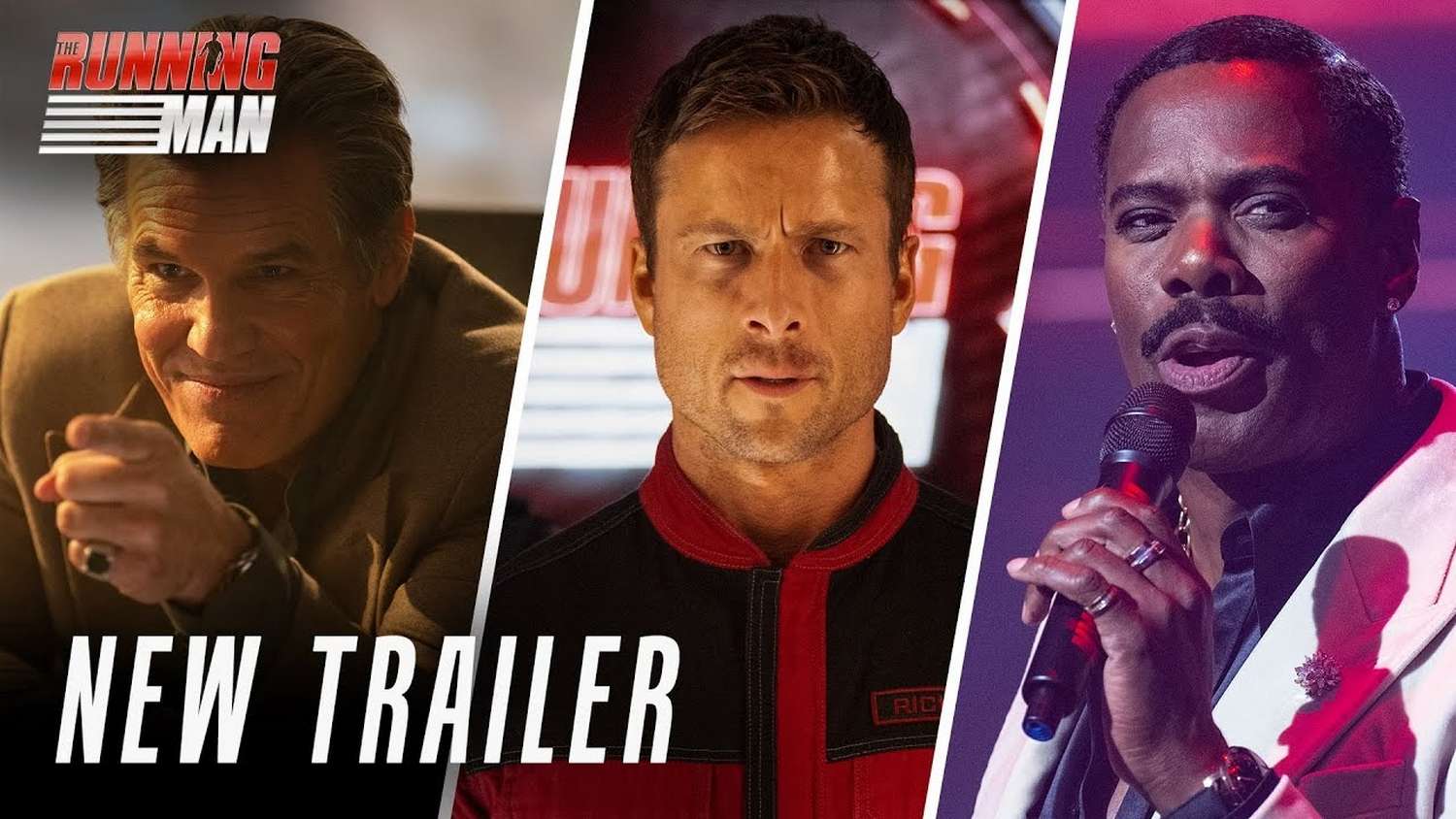
The Kinetic Inferno: Edgar Wright’s ‘The Running Man’ Captures the Rage of a Hyper-Dystopian Age
FILM REVIEW & CULTURAL ANALYSIS — Director Edgar Wright’s highly-anticipated 2025 adaptation of Stephen King’s novel The Running Man (originally written under the pseudonym Richard Bachman in 1982) is less a remake of the 1987 Arnold Schwarzenegger classic and more a violent, rhythmically precise reckoning with the original, far darker source material. Starring Glen Powell as the desperate protagonist Ben Richards, Wright’s film arrives at a time—the exact year, 2025, in which the novel is set—when King’s predictions of media saturation, corporate fascism, and social score surveillance feel terrifyingly prescient.
The film, released in mid-November, is a masterclass in kinetic filmmaking, blending Wright’s trademark whip-pan editing and pop-culture soundtrack with the raw, uncompromising anger of King’s dystopian vision. This analysis dissects how Wright succeeded in capturing the novel’s rage, the effectiveness of the central casting, and the film’s pointed commentary on our post-truth, hyper-reality era.
A Return to the Novel’s Dark Heart: From Camp to Cruelty
The 1987 film was an action-satire, trading King’s bleak social critique for Schwarzenegger’s charisma and campy villains. Wright’s version, co-written with Michael Bacall, strips away the flashy neon uniforms and rocket sleds to focus on a far more grounded and unsettling future that closely mirrors King’s text:
- The Impoverished Protagonist: Glen Powell’s Ben Richards is explicitly a working-class man, blacklisted from his factory job, living in poverty, and desperate for the prize money to buy medicine for his sick daughter. This returns the character to King’s original intention: an ordinary, angry man driven to violence by systemic cruelty. Powell successfully conveys the necessary blend of charm and manic desperation, a crucial departure from Schwarzenegger’s action hero (Source 3.3).
- Totalitarian Surveillance: The film’s dystopia is not just about a violent game show; it’s about a totalitarian government, upheld by corporations, that uses omnipresent surveillance (drone cameras) and constant media programming to keep the populace docile and distracted. The ‘Hunters’—led by a chillingly composed Lee Pace as Evan McCone—are not just costumed wrestlers, but highly-trained assassins supported by a public eager to rat out the Runner via an “app for that” (Source 2.1).
- The Gritty Aesthetic: The production design features a retro-futurist, punk aesthetic that avoids the glossy look of most modern sci-fi. Instead, it highlights the decay of infrastructure, the vast economic inequality, and the desperation of the underclass, making the chase sequences feel less like a spectacle and more like a brutal scramble for survival.

Wright’s Kinetic Vision and Post-Truth Critique
Edgar Wright’s genius lies in his ability to use propulsive filmmaking style to enhance, rather than detract from, the core themes. He uses his kinetic toolbox to satirize the very media he is critiquing:
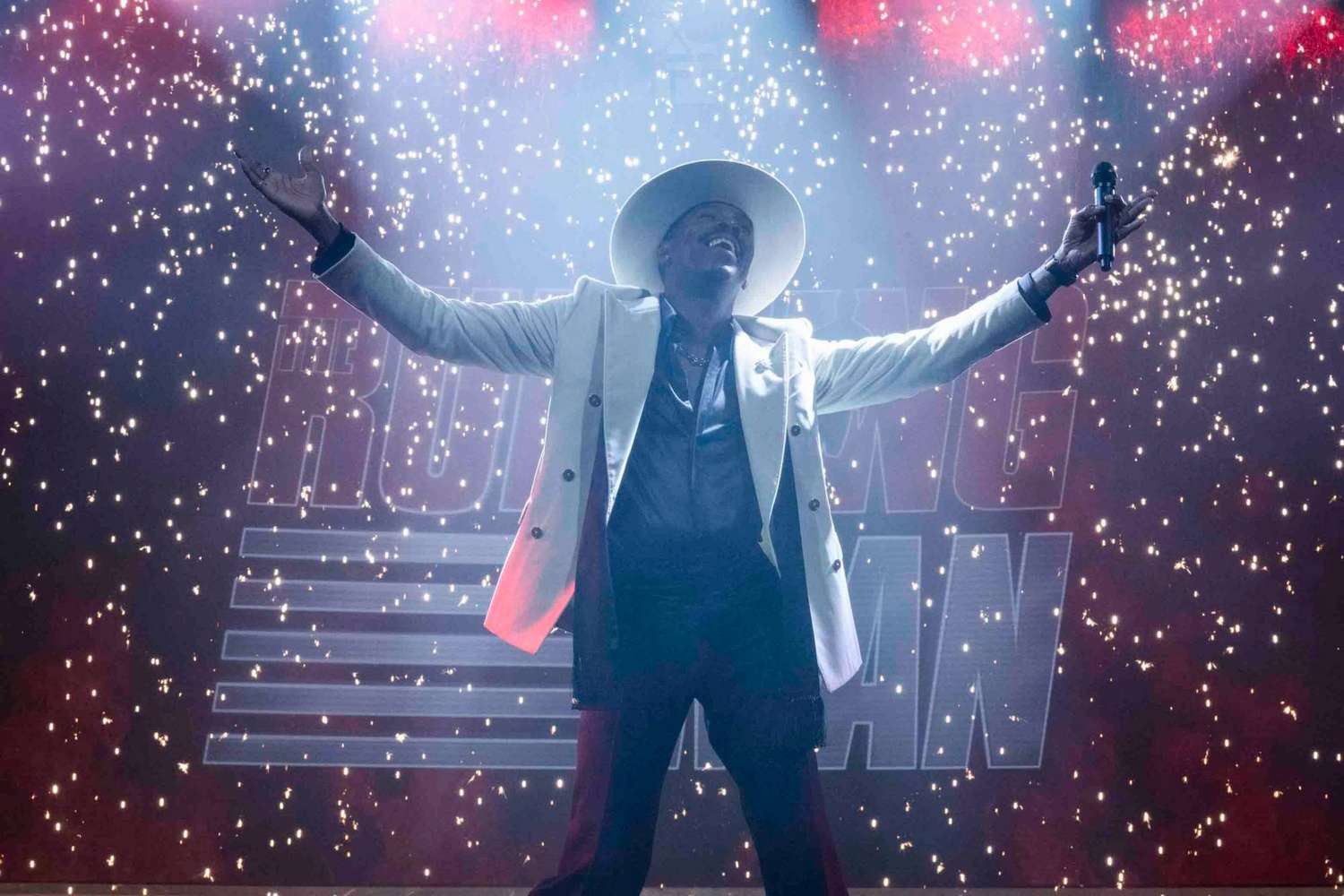
- The Host and Producer: Colman Domingo as game show host Bobby “Bobby T” Thompson and Josh Brolin as ruthless producer Dan Killian are standouts. Domingo’s electric, manic performance captures the superficial cruelty of reality TV hosts, while Brolin’s unnerving, wide-smiling villainy perfectly embodies the corporate indifference that fuels the violence (Source 3.3).
- Information Overload: Wright utilizes his signature fast-cut montages and rapid-fire edits to showcase the deluge of propaganda clips, news reports, and reality parodies that saturate the screen. This maximalist approach cleverly demonstrates how media is weaponized to obscure truth and create an atmosphere of “post-truth” where inconvenience facts are dismissed (Source 2.4).
- The Chase Rhythm: The film works best as a pure, frantic chase movie. Sequences are cut for speed and impact, constantly maintaining a high-octane pace that mirrors Richards’ desperate flight. The soundtrack is expertly curated, injecting unexpected pop slams that provide momentary relief before the dread re-establishes itself, a technique Wright perfected in Baby Driver and Hot Fuzz (Source 2.1).
A Masterstroke with Caveats
While the film has garnered significant praise, particularly from Stephen King himself, who called it “DIE HARD for our time” (Source 3.4), critical reviews have been mixed, citing a tonal imbalance. Some critics argue that Wright’s inherent ‘fun’ and ‘likability’ clash with the truly disturbing, cynical darkness required by King’s text, leading to a film that is highly entertaining but perhaps “suffers from a certain softness” in its social commentary (Source 3.4).
Despite these caveats, Wright’s The Running Man is an important cinematic event. It successfully updates a classic dystopian tale for a generation obsessed with live-streamed spectacle, viral fame, and the erosion of privacy. It is a thrilling, well-cast, and highly topical piece of filmmaking that deserves recognition for its bold return to the dark, angry heart of the source material.
Next Steps: The film’s commercial performance will be closely watched, as it will determine the viability of reviving other dark, anti-capitalist Richard Bachman novels for the screen, such as The Long Walk, which was also recently adapted (Source 4.3).